What a month of receipts knows that your bank statement doesn't
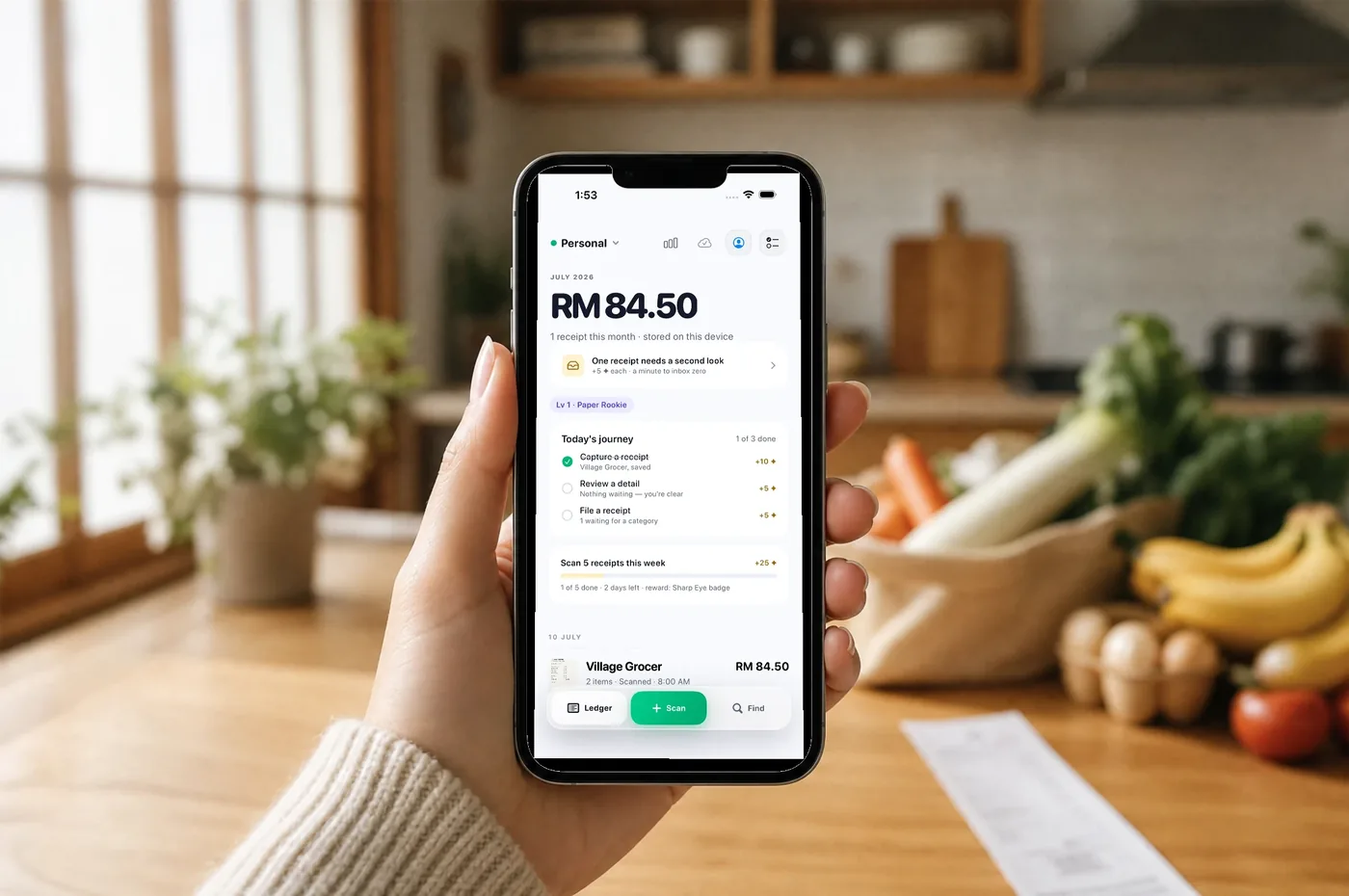
Your bank statement is a list of where your money went. Your receipts are the only record of what it became. The difference sounds small; it changes everything a budget can do for you.
Totals hide, items explain
A statement line says “RM 340, supermarket”. That is an accusation without evidence — it cannot tell you whether the month drifted because of prices, habits, or one indulgent Saturday. The receipt for the same trip says: rice, milk, apples, dish soap, and — ah — imported coffee beans, twice this month.
Item-level records turn “we overspent” into “coffee went up and we bought it twice as often”. One is guilt; the other is a decision you can actually make.
A month is where the patterns live
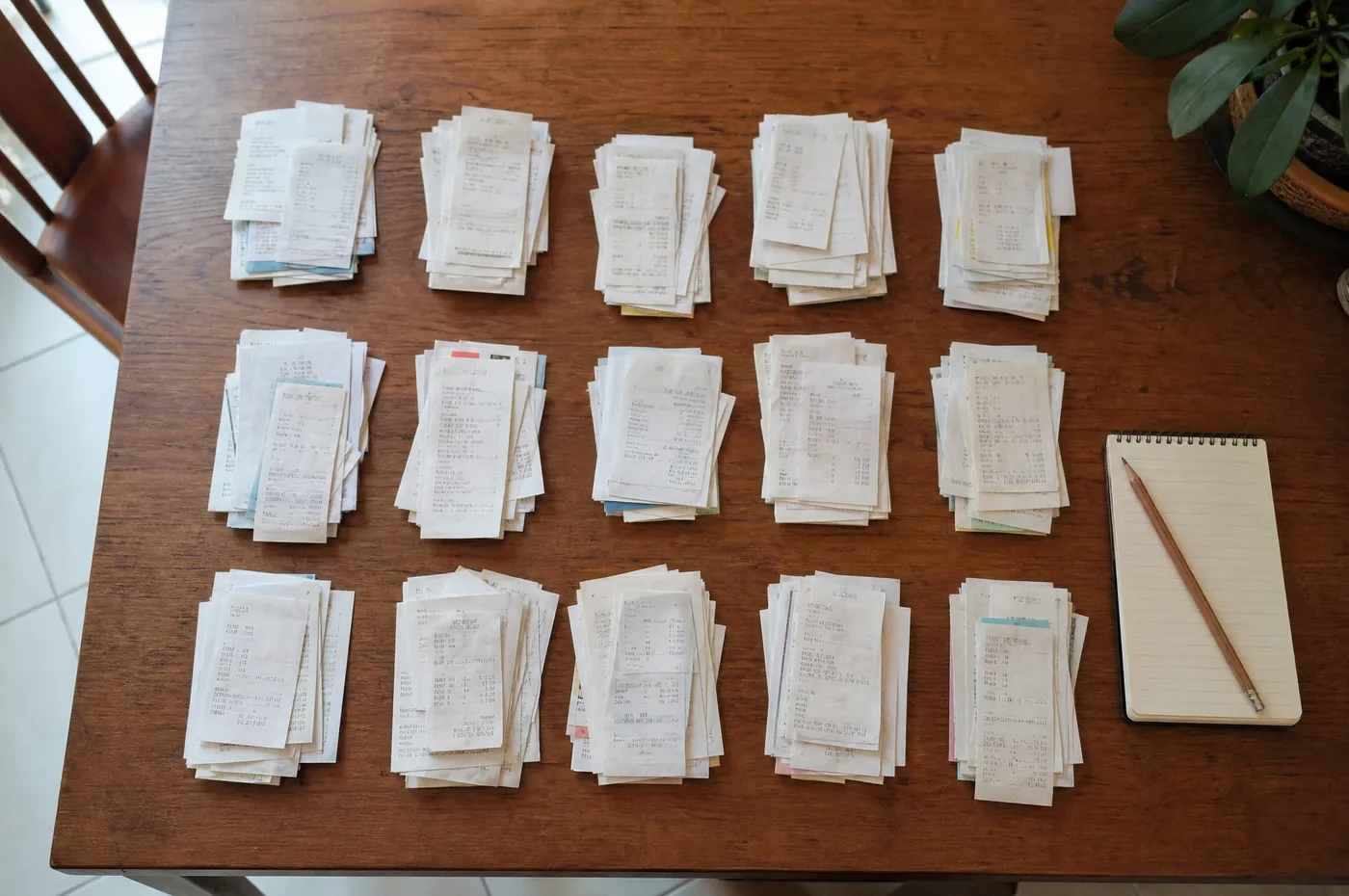
One receipt is noise. Thirty receipts are a portrait: the shop you always overspend in, the item whose price crept 20% since March, the category that swells at month-end. Pip’s ledger reads this for you — spend by week, categories, and each item’s own price history — because the receipts were captured as data, not as photos in a camera roll.
Pace beats post-mortem
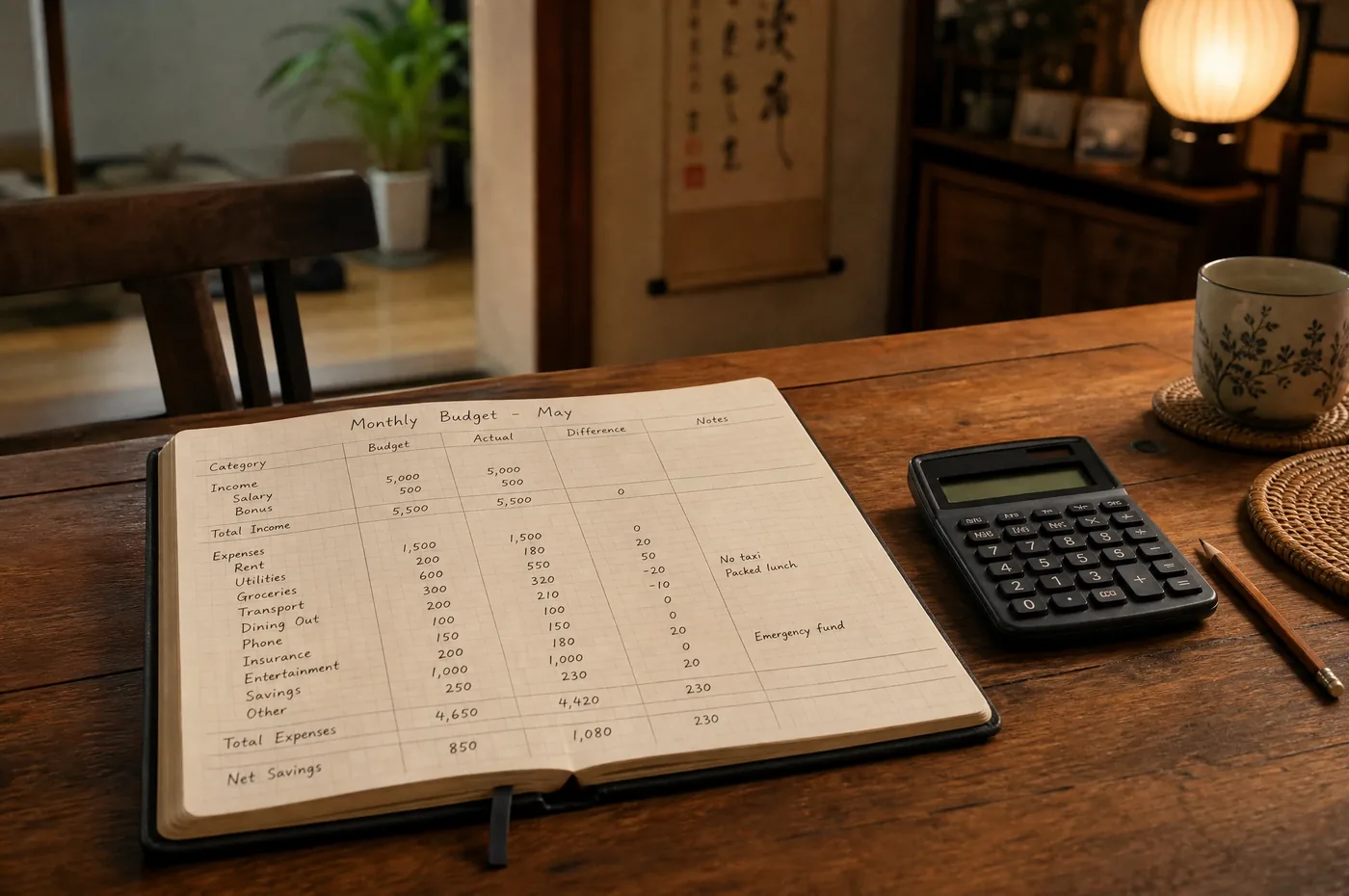
The old way to keep a household ledger was the notebook: honest, but always backwards-looking — you learned you overspent after you had. A budget in Pip has a trajectory instead: the plan drawn as a line, your actual spending on top, and a dot marking where today sits. Ahead of plan on the 12th is a fact you can act on; over budget on the 31st is just a eulogy.
Optional reminders nudge once — and only once — at 50%, 80% and 100%. The household budget page walks through what that looks like on a real month.
The thirty seconds a receipt costs to scan buys a month that can explain itself. See how the ledger works, or get it on the App Store.