Why receipts fade — and what to do before yours do
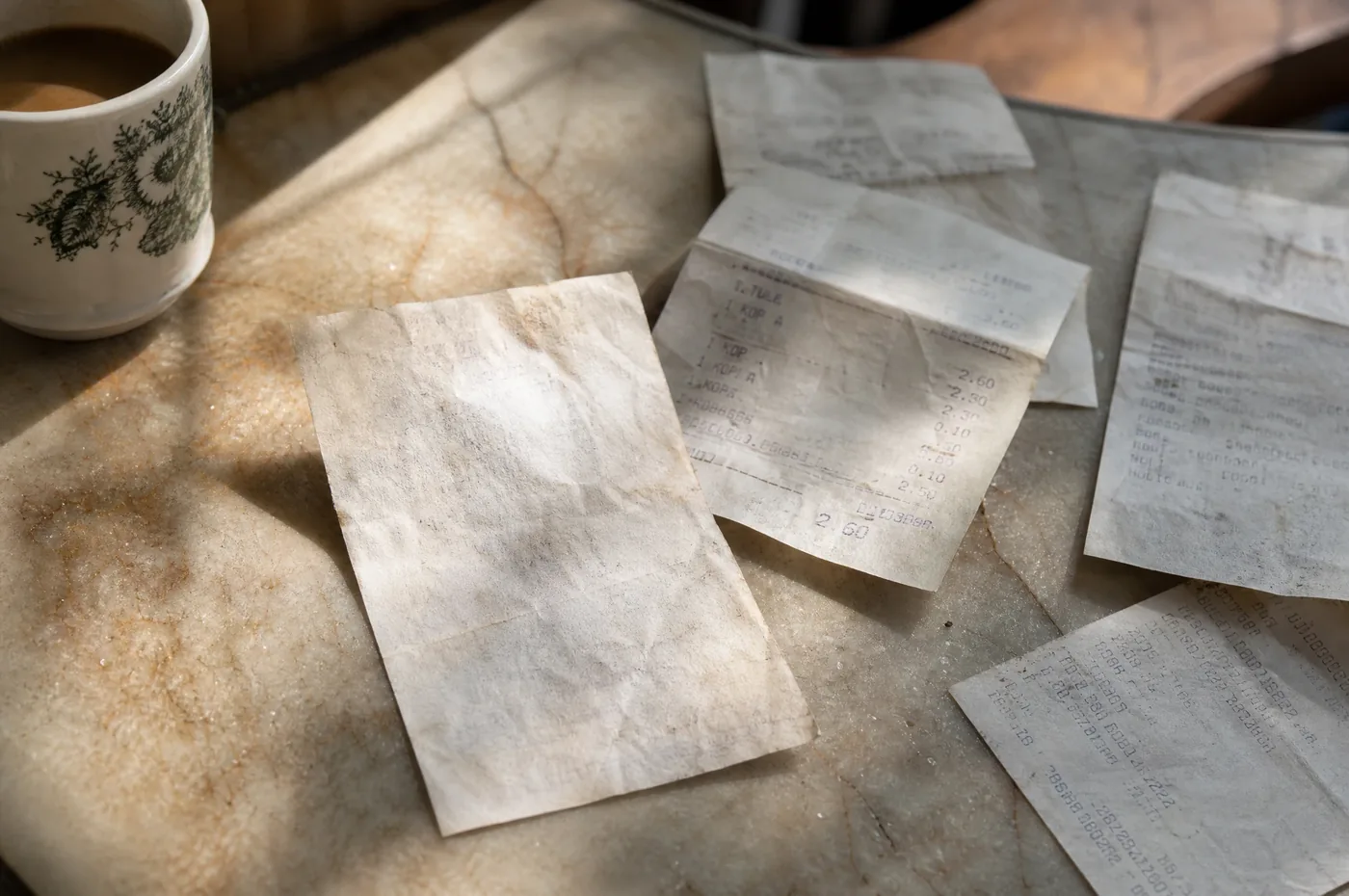
Take a receipt out of a drawer from two summers ago and there’s a fair chance it is now a blank strip of shiny paper. Nothing spilled on it. Nothing rubbed it. It just… left.
The paper is the ink
Almost every shop receipt is thermal paper. There is no ink in the printer at all — the paper itself is coated with a dye and a developer that react and turn black when heated. The print head writes with heat, which is why receipt printers are silent, fast, and never need cartridges.
That chemistry is the whole problem. The reaction that makes the text is not very stable, and anything that resembles the original trigger — heat, light, friction — keeps pushing it around:
- Heat darkens the whole strip (a receipt left in a car turns grey-black).
- Sunlight and UV bleach the developed dye back out.
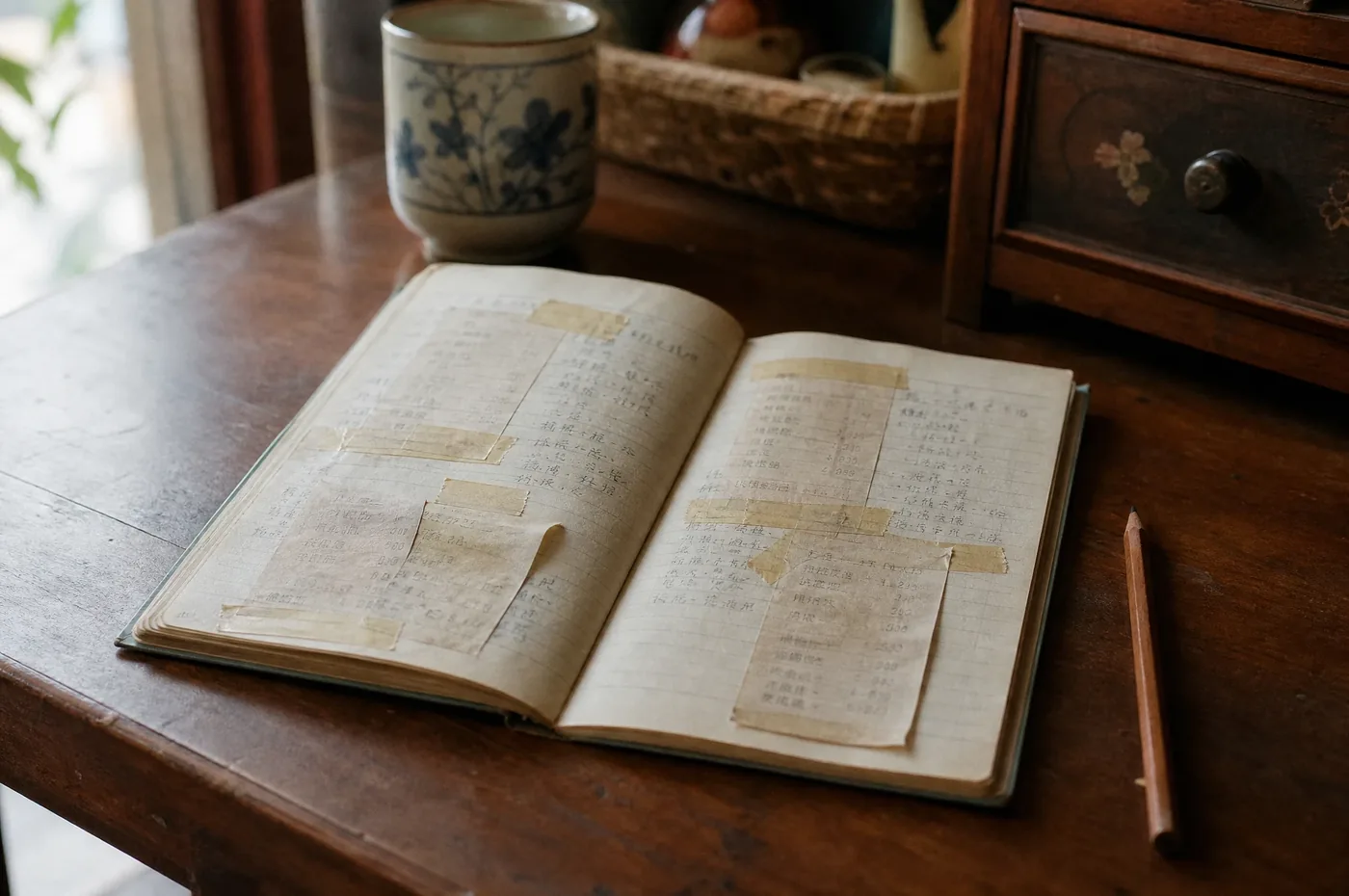
- Plastic and friction are sneakier: plasticisers in wallets, sleeves and sticky tape dissolve the coating. Taping a thermal receipt into a notebook is a slow-motion delete.
Under office conditions the text usually survives a year or two. In a wallet, a car, or a sunny kitchen, months. Receipt paper makers themselves generally promise legibility for about seven years under ideal storage — dark, cool, dry, untouched — which is a way of saying: this medium was designed for the moment of sale, not for your records.
Why it matters more than it seems
The receipts you actually need later are the old ones: the warranty claim in year two, the tax question next April, the “when did the fridge start costing this much?” curiosity. Those are exactly the receipts that fade first, because they’ve been waiting the longest.
And a faded receipt is not “partly gone”. Once the strip is blank there is no practical way to bring it back — the chemistry has finished.
What actually works
The honest advice is boring: capture the text while it exists.
- Photograph or scan receipts soon after purchase. Same week is fine; same season is pushing it for anything kept in a pocket or a car.
- Keep the original for things that matter legally — warranties, big purchases — but stored flat, in the dark, away from plastic. Paper-clip, never tape.
- Make the copy searchable. A camera roll full of receipt photos fails in a different way: the information survives but you can’t find it. What you want recorded is the content — merchant, date, items, amounts — not just pixels.

That third point is why we built Pip. It reads the receipt on your iPhone, turns it into an item-level record you can search and total, and asks you to confirm anything it wasn’t sure about — while the photo itself stays on your devices. The paper can do what thermal paper does; the record no longer depends on it.
Whatever tool you use, the rule is the same: a receipt is a message from a shop to you, written in disappearing ink. Read it into something permanent before it finishes disappearing.
Ada versi Bahasa Melayu untuk soalan warranty: cara simpan resit untuk claim warranty.
Pip reads a receipt on your iPhone the moment you photograph it, so what survives is the text, not the paper. Get it on the App Store.